


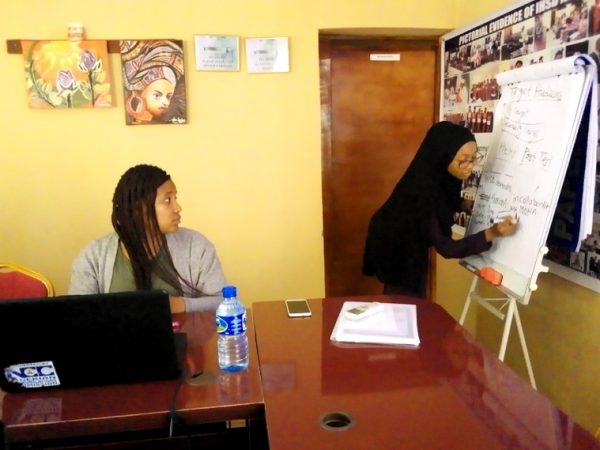


 Barrister Mirian Ezinwa Onu hails from Onicha Mbaise, In Ezinihitte Local Government of Imo State. She graduated from from Faculty of law university of Calabar, Calabar, Cross River State in 2001, and was called to the Nigerian Bar in 2003. She is the Managing Solicitor of Lumen Christi Consult, a firm of Barristers, Solicitors and Arbitrators located in, Port Harcourt, Rivers State of Nigeria. She is also associate member Chartered Institute of Arbitrators, United Kingdom and also a member of the Nigeria Chapter.
EDUCATIONAL ACHIEVEMENT
LEGAL EXPERIENCE:
Barrister MirianEzinwaOnu,began her legal practice at Ibadan, Oyo State in 2003, after her call to Nigerian Bar, starting from the law firm of BayoLawal& Co, the firm specialized mostly in commercial law services and litigation but over the years, she also worked with Sterling Law Alliance and Renewal Chambers which focused largely on corporate clientelle, It can be said with confidence that she has virtually seen all of the vital aspects of law practice from where she has extensively developed her competence and capacity in various areas of law. She has brought to bear this wealth of experience as managing solicitor of Lumen Christi Consult,
Humanitarian Work
Barrister MirianEzinwaOnuworked with Women Rights Initiative, she also have standing relationship/partnership with the Legal Aid Council and the Justice Development and Peace Commission/Caritas. Herparticipation in pro bono cases is not only consistent with the drive to provide access to justice to all but also an extension of wholistic approach to law practice as a humanitarian vocation. She is also a very active member ofInternational Confederation of Society of Vincent De Paul, Nigeria, a charity organization of the Catholic church, where she has held several positions.
MEMBERSHIP OF PROFESSIONAL AND HUMANITARIAN BODIES
 HISTORIAN, ACCOMPLISHED PUBLIC SERVANT AND INTELLECTUAL BUREAUCRAT
The well-rounded historian and intellectual bureaucrat was born on June 15, 1955, in Lembi, a suburb of Kumo, Gombe State.
He attended the Local Education Authority School, Pindiga, between January 1962 and December 1969 for his first leaving school certificate. The young Muhammad Ahmad proceeded to Government Secondary School Gombe, between January 1970 and December 1974 to obtain his West African School Certificate.
His unquenchable thirst for knowledge led him to Bayero University College, Kano, for his IJMB programme, between July 1976 and September 1977; Bayero University, Kano, for his first degree in History/Education, between October 1977 and June 1980; Bayero University, Kano, for his master’s degree, between October 1982 and September 1984 With burning ambition and aspiration for success, MuhammadAhmad enrolled at the University of Birmingham, United Kingdom, for his doctorate degree, between October 1986 and September 1989. He also attended the Senior Executive Course of the prestigious National Institute for Policy and Strategic Studies (NIPSS), Kuru, Plateau State, between January 1998 and November 1998 where he was admitted into the Membership of the National Institute (mni). At the National Institute he was adjudged to be a highly gifted intellectual – bureaucrat who possessed attributes of patience, astuteness and modesty. He was retained by his Syndicate at the Institute as a Rapporteur throughout the course in recognition of his brilliance as a writer.
By virtue of a successful career in the public service, he could be said to have earned the tag of a seasoned administrator. Ahmad has on enviable work experience, stretching more than 37 years. Upon graduation from secondary school, Ahmad spent a year as a teacher at the Bajoga Primary School, Gombe LEA. This was between June 1975 and June 1976. In 1980, after his graduation from the University, Ahmad was deployed to the Batoro Community Grammar School, Shagamu, Ogun State, between 1980 and 1981, for his compulsory National Youth Service Corps. Having completed his one-year NYSC service, Ahmad joined the now defunct AdvancedTeachers’ College, Gombe, BauchiState, as a lecturer and head of the school’s History Department, between July 1981 and December 1984. Ahmad was appointed the Vice-Principal of the Government Secondary School Gamawa, in October 1984. It was a position he held for a short spell, because the College of Education Azare came calling in December 1984.
They appointed him Lecturer and Acting Head of the History department, until June 1985, when he was appointed Secretary of the Bauchi State Scholarship Board – a position he occupied until May 1986. Between June 1986 and September 1986, Ahmad was deputy director, planning and monitoring, Bauchi State Scholarship Board. Four years later, in 1990, he was appointed Assistant Director, School Services, Bauchi State Ministry of Education. In August, same year, he was redeployed to the Planning Department of the Ministry as its Assistant Director. He served until December 1990, when he had to leave to head the Monitoring and Evaluation Unit of the National Commission for Nomadic Education, in Kaduna.
Having been dependable all the while and carried out his assignments to applaudable conclusions, Ahmad was appointed a Director-General in the Bauchi State Public Service (Special Services and Political Affairs, January 1991 to May 1995; Ministry of Agriculture and Rural Development, May 1995 to September 1996). By October 1996, when Gombe State was created, he was appointed one of its pioneer Director-Generals (Ministry of Agriculture and Natural Resources, October 1996 to January 1997; Special Services and Political Affairs Bureau, January 1997 to January 1998). In November 1998, he was appointed a Permanent Secretary in the Gombe State Public Service, a position he occupied until May 2000, when he was transferred to the Federal Government as Deputy Director, Interstate Boundaries, of the National Boundary Commission. A few months later, in October, he was appointed Acting Director and head of Inter-State Boundaries Department (he variously held other positions as a member of the Management Committee of the National Boundary Commission, Secretary of the Ad-hoc Committee for the Withdrawal and Transfer of Authority in the Lake Chad Area, Secretary of the Presidential Committee on the Management of the Akwa Ibom/Cross River Inter-state boundary, Coordinator of the Implementation of the Onshore/Offshore Dichotomy Abrogation Law in 2004 and acted as Ag.Director-General of the National Boundary Commission for various weeks, between 2001 and 2005).
Between June 2005 and August 2006, Ahmad was appointed Executive Director, Finance and Administration, Nigeria-Sao Tome & Principe Joint Development Authority (JDA). In January 2007, he returned to the National Boundary Commission and pioneered the Directorate of Border Regions Development, which later metamorphosed as Border Communities Development Agency (BCDA).
For two years, between October 2008 and October 2010, he was the pioneer Consultant to the African Union Border Programme, Peace and Security Department, African Union Commission, Addis Ababa, Ethiopia. In that capacity, Ahmadbecame clearly involved in boundary diplomacy especially in the advocacy of the African borders as agents of peace and integration. In that regard, had organized regional and sub-regional conferences on African boundary matters, organized the preparation of the Handbook of Boundary Delimitation and Demarcation in Africa and actively participated in the preparation of the African Union Convention on Cross-Border Cooperation.
After many years of commitment to the objectives of the National Boundary Commission and helping to steer it aright, Ahmad was appointed Director-General of the National Boundary Commission on March 4, 2011. He holds the position till date.
Ahmad has been entrusted with not a few delicate missions, conducted well versed researches, published widely on African boundary issues and bagged a number of commendations on the way in his long, meritorious career (among the recent ones are commendation by the Director-General of the National Boundary Commission for being the Secretary of Nigeria’s team on the withdrawal of Nigerian Military and Civilian presence from the Lake Chad Area, following the ICJ’s ruling in December 2003; and commendation by the leader of the Nigerian delegation to the Cameroon-Nigeria Mixed Commission, Prince Bola Ajibola, SAN, CFR for the successful organisation of the Monitoring Mission of the Mixed Commission Observer Group and for reporting the state of Nigerians in the Bakassi Peninsular, in April 2007).
This advocate of fairness and propriety speaks Fulfulde, Bolewa, English, and Hausa languages fluently. He also has some basic knowledge of Arabic and French. He is married with children.
 Nonye Nweke is the founder and CEO of Cerebral Palsy Center (CpCenter) the first center in Nigeria to solely manage children with Cerebral Palsy (CP) a congenital disorder that affects part of developing infant’s brain. CpCenter since inception in 2010 has provided children with CP with free therapies, care, boarding and respite to the families.
She studied Science Education from university of Benin, Nigeria and also holds a diploma in journalism. She has had a hands-on training on management of children with CP at Turkey Spastic Children’s Center, Istanbul, Turkey. A member of the International Cerebral Palsy Society (ICPS), Nonye is a disability advocate but passionate about CP.
She parents an eleven year old daughter living with spastic quadriplegic CP, who she says lights up her life.
 Adaora Onyechere, Is a Broadcast Journalist Extraordinaire, An Enigmatic, mind gripping On AIR Personality with African Independent Television AIT.Her intellectual Foray on Kaakaki the African Voiceadds that deep, intuitive edge that wasn’t existent afore, Producer and Presenter of AIT’s Gender Agenda Africa’s Number 1Premium program detailing the issues from across Africa on Gender on AIT.
One of the top 20 outstanding Youths and most recently chronicled by WAFA world affirmative action HONORS as amongst 100 Most Influential African Women in Nigeria and Sub Saharan Africa a meritoriousrecommendation by the United States Congress women board on advocacy for Gender and human rights. A woman witha concise vision for Nigeria and Africa in areas concerning inclusive structural development and deeply committed to championing youth and women policy driven intervention to the fore.
Won the Best Act for Television Presenting and Creative Arts on Fresh Acts in London in 2004, With outstanding experience in both television and radio production in Both the United Kingdom, the West Midlands she has produced from children’s programs to science fiction screen adaptation and was also the lead actress in IF ONLY an educational screen play on BBC dealing with cancer and infertility, developed independent real-time documentaries on the Asaba Massacre and Mary Slessoron CHANNEL 4 and on BEN TV London and is a Talented Acrylic Artist.
She is also The Vice President of The Apo Hills DiamondAn Ivy League branch of toastmasters international, A member the board ofthe I am Nigeria , Leadership for Africa ,The Not too Young to run amongst many others.
With also a background in English and Broadcasting, Creative writing and Project Management, Adaora is the Cordinator of Deep Talk a Mentoring Group which reaches out to young women between the ages of 15 – 35. Adaora is the Initiator and Founder of Yellow Jerrycan Save a Child Foundation a platform advocating for the rights of IDPS, under this she initiated “For Love Sake teaching project at the IDP camp Durumi.She is also the NOA mission Peace Envoy to East and West Africa and The Most Laudable And pro existing voice on Gender in Nigeria and in some pasts of West Africa. She has won many awards in and outside the country is currently the Female Role Model of The Year by The United Women Association for her numerous papers on policies and policy implementation strategy on Gender, IDPS and the physically challenged.A thought provoking Spoken Word Artist with her album Change smitten detailing issues of leadership and the led, Author of Serendipity ,ScepterAnghuli(HAPPINESS) a collection of poetic memoirs and the Short classic Just Because He Said I Could.
Adaora is referred to as a Passionary and a Visionary. She is a definitive, quintessential, Intelligent and a remarkably people oriented progressive Trail blazer of our time and in years to come
 Sadiya Umar Farouq hails from Zurmi Local Government Area of Zamfara State of Nigeria. She grew up in Zamfara State and attended the Federal Government Girls College, Gusau, Zamfara State. Sadiya Umar Farouq, upon completion of her Secondary education, proceeded to Ahmadu Bello University (ABU), Zaria, Kaduna State where she studied Business Administration, with specialization in Actuarial Science. She also earned two Masters Degrees; Masters in International Affairs and Diplomacy and Masters in Business Administration (MBA) from ABU in 2008 and 2011, respectively.
After her graduation from the University, she ventured into public service as an Administrative Officer in the National Assembly Service Commission, Abuja. During that period, Hajiya Sadiya was responsible for overseeing the daily administration of the Commission. Her service with Public Service was short-lived as she left the service as a Senior Administrative Officer to join active politics in 2011.
Sadiya Umar Farouq political life commences with her membership of Congress for Progressive Change (CPC), where she held the post of National Treasurer and she effectively and efficiently managed the campaign funds for the party. Following the merger of CPC, ANPP and ACN which metamorphosed into All Progressives Congress (APC) she was appointed the interim National Treasurer of APC. On this position, she did not only demonstrate prudent financial management, she also promoted financial transparency and accountability. Sadiya Umar Farouq also played a critical role in the 2015 Presidential Campaign following her membership of the APC Presidential Campaign Council, which eventually took over government from the then incumbent.
Sadiya Umar Farouq was appointed the Honourable Federal Commissioner (HFC) of the National Commission for Refugees, Migrants and Internally Displaced Persons (NCFRMI) on September 26th 2016. She officially resumed duties as Honourable Federal Commissioner on October 26th 2016.
On assumption of duty, as the Honourable Federal Commissioner, HajiyaSadiya Umar Farouq acquainted herself with the nature of the job in the Commission and immediately drew up a new Strategic Roadmap of action that attempts to reposition the Commission to take the leading role as a humanitarian organization and bring the Commission’s activities to world standard. The new Strategic Roadmap of the Commission however, focuses on total provision of durable solution to Persons of Concern, while emphasizing the establishment of standardized procedures for utilizing Research, Data Gathering & Planning for Resettling, Rehabilitating, Reintegrating and Readmitting all persons of concern.
Sadiya Umar Farouq, brings to the role of the Honorable Federal Commissioner of the National Commission for Refugees, Migrants, Refugees and Internally Displaced Persons extensive financial and managerial experiences and expertise, which she has garnered overtime from her exposure in politics as National Treasurer of the present ruling party in Nigeria.
Since her assumption of office, the Commission has undergone extensive systems strengthening including re-branding and capacity building of its staff. She has also embarked on a coordinating mission by seeking partnerships with relevant stakeholders to enhance the Commission’s presence in the field as the lead government agency responsible for coordination, protection and assistance of persons of concern in the North-East part and other crisis spots in Nigeria. She has engaged local and international stakeholders, and adopted a holistic approach to building and maintaining partnerships from the bottom up.
Sadiya Umar Farouq, while looking forward to executing medium and long-term outcomes of the Commission through policy strengthening, has travelled to many parts of the world propagating the vision and mission of the Commission and also tappedinto the practices and experiences of other world partners.
 Tunde Oderinde is a seasoned program manager with over 20 years of experience in project design and implementation, specializing in private sector and market development across a range of sectors, including the agribusiness industry.
He has a proven ability to lead and manage multi-million dollar donor-funded programs, business development activities, and facilitate targeted stakeholder engagement for clients including the UK Aid Department for International Development (DFID), and the German Development Cooperation (GIZ). He has vast experience in conceptualization of market linkage assessments and design in agricultural and rural markets.
Highly skilled in the application of the Making Markets work for the Poor (M4P) approach and similar value chain development strategies for large-scale market development programs. Has ability to deliver results through the implementation of value-chain development concepts and supply chain improvement.
He has managed various portfolio on donor funded project and led geographically dispersed project teams and consultants. He is vast in leading project external relationship management with the private and public sectors to attract adequate and desired support to aid the project impact delivery. He is currently the Team Lead on the UKAid Nigeria MADE Project – a market development programme in the Niger Delta
 Mr. Okechukwu Jude Chinedu is a Graduate of Accountancy. He attended Federal College of Education (Technical) Omoku, Federal Polytechnic Oko and Adasin University Akoko.
He obtain the following Certificate/ Degree NCE (Tech). HND, MEM. (Master in Environmental Management) from the above Institutions.
He is a member of Institute of Chartered Accountants of Nigeria, an Associate Member of Nigeria Institute of Management (Chartered) he has his Audit Training with Prestigious Audit Firm. Price Water House and later join IkemMbango& Co (Chartered Accountant) as an audit manager. Mr. Okechukwu Jude has his accounting software training in South Africa (sage Pastel Evolution etc). He has worked as project Accountant, Treasury Manager and Chief Accountant with Income Electix Limited, a power Holding Company in Nigeria.
Okechukwu Jude Chinedu is currently a partner of OkechukwuChinedu& Co. Managing Consultant of Okechukwu Jude Chinedu Consulting, and resource person with Nigeria Institute of Management and institute of Chartered Accountants of Nigeria. Mr. Okechukwu has delivered many Seminar/Workshops in Finance, Accounting, Management and Entrepreneurship development.
He is humanitarian with a difference engaged in various humanitarian activities in many communities in Orlu Local government areas. Pioneered the distribution of medical facilities in some rural areas in Imo State.
Okechukwu Jude Chinude is Rotarian and past president of Rotary Club of Port Harcourt highrise, District 9141, Nigeria. He is happily married to Mrs. Charity Okechukwu Jude and the Marriage is blessed with 5 Children, 2 Boys and 3 Girls.
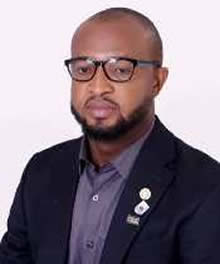 ROTARIAN STANLEY CHINAEMEREM EGEGE was born to the family of Mr. and Mrs. Nathaniel Egege from Obi-Ngwalocal government area of Abia State.
He attended Stella Maris College, Port Harcourt and later, Obio Comprehensive College before moving to University of Port Harcourt where he obtained Bachelor of science degree in Economics from the University of Port Harcourt, Nigeria. He have attended several trainings and certification in and outside Nigeria, in the areas of Automation, management etc.
He worked for Orient chemical company based in Nigeria as an admin/ Operations personnel. He is the Managing Director/ CEO of CE-STALONG Ltd a leading oil and gas company which he established in the year 2003 having operation within African countries and today is holding global partnerships of over fifteen (15) companies around the world.
He seats in the board of several companies including INDUTEK LLC, United states, Alliance Group etc. He is also the lead of CE-STALONG foundation.
Rotarian Stanley ChinaemeremEgege is a member of the American Society of Mechanical Engineers(ASME)
He is a Global Youth Ambassador.
He is a founding member of the Hillcity Foundation.
He is a Member of Air Assault golf club Port Harcourt.
He is a member of Ngwa welfare club.
He is a member of NgwaPatriots.
HE is an executive member of Itungwa Family meeting.
Rotarian Stanley Chinaemerem is today, the South East coordinator of the Nigerian Youth Congress, a man with high desire for community growth and Nigeria at large, a man of high level of integrity and charisma. He is a Christian, a Devout Anglican member.
ROTARIAN STANLEY CHINAEMEREM EGEGE was born to the family of Mr. and Mrs. Nathaniel Egege from Obi-Ngwalocal government area of Abia State.
He attended Stella Maris College, Port Harcourt and later, Obio Comprehensive College before moving to University of Port Harcourt where he obtained Bachelor of science degree in Economics from the University of Port Harcourt, Nigeria. He have attended several trainings and certification in and outside Nigeria, in the areas of Automation, management etc.
He worked for Orient chemical company based in Nigeria as an admin/ Operations personnel. He is the Managing Director/ CEO of CE-STALONG Ltd a leading oil and gas company which he established in the year 2003 having operation within African countries and today is holding global partnerships of over fifteen (15) companies around the world.
He seats in the board of several companies including INDUTEK LLC, United states, Alliance Group etc. He is also the lead of CE-STALONG foundation.
Rotarian Stanley ChinaemeremEgege is a member of the American Society of Mechanical Engineers(ASME)
He is a Global Youth Ambassador.
He is a founding member of the Hillcity Foundation.
He is a Member of Air Assault golf club Port Harcourt.
He is a member of Ngwa welfare club.
He is a member of NgwaPatriots.
HE is an executive member of Itungwa Family meeting.
Rotarian Stanley Chinaemerem is today, the South East coordinator of the Nigerian Youth Congress, a man with high desire for community growth and Nigeria at large, a man of high level of integrity and charisma. He is a Christian, a Devout Anglican member.
 Sir (Chief) Emmanuel Mark (JP) was born in Port Harcourt and he hails from Omagwa Town in Ikwerre Local Government Area of Rivers State.
Academic Background
Emmanuel Mark studied at the Rivers State University of Science and Technology (RSUST) Port Harcourt where he earned a second class honour degree (upper division) in Estate Management in the year 1999. He later earned an M.Phil in Environmental Management (2002) and LLB Law (2010) from the same University. He was later called to the Nigerian Bar. Mark is a distinguished Alumni of Executive Education, Harvard Business School Class of 2014. He was an outstanding student’s Leader becoming the President, Estate Management Association of Nigerian Universities (EMSANU) RSUST Chapter and later National President Estate Management Association of Nigeria.
Professional and Leadership Strides
Emmanuel Mark is the Chief Executive Officer (CEO) of the Nuel –Mark Group. The Group is a conglomerate with interests in Real Estate, agriculture, publishing, hospitality and charity. These businesses are the product of the strategic entrepreneurial/leadership of Emmanuel Mark, who retains streaks of transformational intellect and analytical capacity, capable of driving systemic change, fostering equity and inclusive development vital for maximizing effectiveness/efficiency of business endeavors.
He is especially very familiar with managing diverse teams of professionals, skilled in rapidly assembling and managing teams, developing core team strengths, and leading teams to effectively execute identified tasks in addition to experience, working with development agencies and organizations. Emmanuel Mark has been an active member of the Nigerian Institution of Estate Valuers and Surveyors (NIESV), and consistent with a coterie of leadership roles.
Emmanuel Mark also belongs to other allied professional associations like International Real Estate Federation (FIABCI), International Right of Way Association (IRWA), The Commonwealth Association of Surveying and Land Economy (CASLE), International Facilities Management Association (IFMA), Environmental Management Association of Nigeria (EMAN), Nigerian Bar Association (NBA), African Bar Association (ABA) and International Bar Association (IBA). He is a fellow of the Nigerian Institution of Estate Surveyors and Valuers; Institute of Corporate Administration of Nigeria.
Sir (Chief)Emmanuel Mark (JP) is presently the National President of International Right of Way Association, Chapter 84, Nigeria. The International Right of Way Association is a professional member Association comprised of Global infrastructure real Estate practitioners.
Business and Work
Emmanuel Mark has exceptional ideologies, philosophies and world views on contemporary issues. This is more pronounced in his uncompromising attachment to moral, entrepreneurial and professional excellence. For him, this is most manifest in the fact that in less than three years of graduation he defied all odds to get enmeshed in the risky world of self-employment through the setting up of a group of firms, and providing employment for over 27 young graduate Nigerians.
Amongst his companies are: NUEL MARK & PARTNERS, an indigenous firm of Estate Surveyors and Valuers registered in Nigeria as a business concern with Registration No. PH/079872 and recognized by the Estate Surveyors and Valuers Registration Board of Nigeria (ESVARBON) to practice the profession of Estate Surveying and Valuation throughout Nigeria.
Another is; NUEL MARK ENVIRONMENTAL SERVICES LIMITED, a professional services firm focusing on the environmental needs of our clients and providing them sustainable environmental strategies and solutions.
TOTAL RIGHT OF WAY SERVICES LTD is a unique multi-disciplinary consultancy that provides a comprehensive set of professional services to organizations and businesses involved in Right of way services.
Yet, another is TZARAGE FARMS which is involved in a range of agricultural and catering services.
His current project is ZEGLAND PARKS AND RESORTS which comprises of Integrated Entertainment complex in Rivers State. The complex when completed will come with a theme park, water park, Hotel and other Entertainment venues, including the outdoor shopping center. Family Life, Community and Social Capital Empirical evidence throughout the past twenty years of Emmanuel Mark’s adult life suggests a man that exhibit uncommon knack and particular qualities (or characteristics) that are more likely to be resilient for community engagement and development.
Clear instances of these are the NUEL MARK DEVELOPMENT FOUNDATION which within two (2) years of its existence partnered various Rotary and Rotaract Clubs in Rotary International District 9140 to fund various community and vocational development projects worth over sixty million naira in over 20 communities spread in 11 states of southern Nigeria and beyond.
It will interest you to know that this foundation, single handedly built a Police Station in Omagwa Community to boost the policing efforts in Rivers State. It has been said to be the single biggest Station donated to the law enforcement agency by a private individual or Organisation in the State.
In 2016, His Royal Majesty OgurimerimeUkori 1, Mike Omeru JP honored Emmanuel Mark with the Chieftaincy title of Okode of Agbon Kingdom. The significance is that this son of Rivers State is today an Olorogun in Kokori land in Ethiope East LGA of Delta State. Emmanuel Mark is a devout Christian and a Knight of St. Christopher of the Anglican Communion. He is married to Goody his beautiful and charming wife and they are blessed with children.
Awards
Sir Emmanuel Mark is a recipient of over one hundred Awards from various institutions, Organisations and Rotary Clubs all over Nigeria.
He is also an Ambassador for peace and justice of the Peace of Rivers State Government.
Philosophy and vision
Mark is very humble and ever willing to learn irrespective of his personal views, opinion and academic qualifications. He never throws his weight or status around but ever simple, gentle and receptive. He takes great interest in creativity and innovative thinking and never compromises honesty and fairness to all.
 Dr. Abali Chuku is a post-independence child having been born on November 23, 1962 in Port Harcourt, Rivers State. He hails from Amaeke Item, Bende Local Government in Abia State.
He had his primary education at Bruce Grove Primary School, Tottenham, England, from 1971 to 1974. Young Chuku enrolled for his secondary education at Northumberland Park School, Tottenham, England, in 1974.
The following year, he returned to Nigeria and was admitted at the famous Mayflower School, Ikenne, Ogun State, a first-class secondary school famous for its scholarship as well as the antecedents of its founder, the late Dr. Tai Solarin, where he completed his secondary education in 1980. He came out in flying colours having earned distinction (A) in 10 subjects. The same year (1980) he secured admission to read medicine at the University of Nigeria, Enugu Campus, graduating in 1986 with MBBS.
Dr. Chuku’s career trajectory is dotted with significant landmarks. He first began as a house officer at Queen Elizabeth Specialist Hospital (now Federal Medical Centre), Umuahia, in 1986. He was the doctor in charge, Rural Health Centre, Kafin Koro in Niger State, and later as medical officer, City Clinic, Suleja/Kafin Koro Annex, all between 1987 and1989..
He later relocated to Lagos in 1989 and was engaged by Legus Specialist Hospital, Igbobi, as a medical officer. He worked for only one year and joined the services of Life Support Medical Centre, GRA, Ikeja, also as a medical officer and worked from 1990 to1992. He obtained an Associate Fellowship of the Postgraduate Medical College at the Postgraduate Medical College of Nigeria in 1992.
He returned to Enugu in 1992 and was appointed Registrar, Ophthalmology at the Department of Ophthalmology, University of Nigeria Teaching Hospital. He grew progressively and rose to the position of Chief Resident Ophthalmologist in 1994. He occupied this position until 1996 when he was appointed Consultant Ophthalmologist, Federal Medical Centre, FMC, Umuahia after only 4 years of residency training having bagged the Fellowship of West African College of Surgeons in 1996.
By 2000, he became Consultant Specialist Grade II and later Consultant Specialist Grade I, Ophthalmologist also at the FMC, Umuahia, in 2004. He was the Head of Department of Ophthalmology at the FMC, Umuahia, for 14 years.
The icing on the cake of DrChuku’s soaring career was his appointment in May 2011 as Chief Medical Director, FMC, Umuahia.

He is the Executive Director JPO and Sons limited bom on 18* December 1986 at Perugia Italy .He studied Music at Obafemi Awolowo University ile Ife .
He was born talented as a music Professional specialize in R & B and He has supported so many Youth in developing and growing their Talent in Music industry.
 Chief Igdan Godwin was born on 2rd July, 1956, in the city of Benin Edo State. He attended St. Peter Primary School in Benin City and kpolo Grammar School in Edo State. He did his A/level in Holy Trinity Grammar School Sabon Gida Ora, Edo State.
He later Furthered his Educational career into University of Lagos while he was there, he did an entrance examination to join Nigerian Air Force and got Admitted as a Cadet officer. He was immediately transferred to flying unit where he did his primary flying school but was later grounded on health ground and he was sent on a Course to read purchasing and supply up to advance level.
After the course, he was chosen to go the old Bendel state, to recruit men and women into the Nigerian Air force. In 1984, Chief Igodan Godwin became the A. D .C to the then Lagos State Governor. After his retirement he went into private business and set up an IM.G.O to cater for the less privilege in the society.
He equally set up an N.G.O. Called Hands across Nigeria for Unity, Peace and Progress which is still ongoing He furthered his educational career in University of Abuja where he got a degree in Business Administration.Today, he isa real Estate developer and an Integrated Farmer. He is a Chairman of Gees Construction Company Ltd, Chairman of Gees and in vain Nigeria ltd. He also holds a franchise of Airtel as a distributor. He is happily married with three children
 He is the President Founder of a Tv/Radio Reality Magazine Program Called Brekete. Transmitted on Love FM104.5 Mondays-Fridays 7.30am-8.30am and ON DaarSat TV Station.
He is one Man that is passionate about the Challenges of the Poor, Widows, Orphans, Less Privileged and any one whose Fundamental Human Right has been violated.
This is why he his addressed as the “VOICE OF THE VOICELESS”. He has made positive impact in the Lives of so many people Financially, Health wise Unlawful dismissal. Assault ,Human Development, Job scandal ,Gender discrimination. Domestic Violence settlement and Many more. He is a Chartered Mediator, Humble, Kind and he Is a bless Man to the world. His popular Slogan his “HEMBELEMBE.OLOLOLO”.
 MR. Felix Ndukwe (JP)was born on the 141H of April, 196S, in Abiriba, Abia State. He has been involved in so many Humanitarian activities which include:
He is passionate about humanitarian services and has used his musical career to serve God and Humanity, Felix is one of those early new generation gospel singers from the Eastern Nigeria who brought dignity to the music industry and has used same to support the upcoming young generation as a legacy.
 She is a self motivated, creative, analytical, proactive and highly intuitive woman. Born on 3rd March 1970, She bagged her degree in Mass Communication from University of Ife (now Obafemi Awolowo University) in 1994.
Princess Oluwakemi Cecilia Adeniji has carved a niche for herself where she uses her individual skills and expertise to encourage others in her team towards achieving overall organizational goals while adding value to both the organization and individual Lives.
She has served in several capacities in different organizations including PA to several Minister Governors and Wife to former Vice-President of the Federal Republic of Nigeria.
She is a Director of several organizations and different bodies including: MD, Kemitex Global Resources, Director, Mateco Installations Peruga, Italy, President Oduduwa Oil Refinery Nigeria Ltd, Executive Director, Planning and Mobilization, Amexurn Refinery Ltd, Ikang, Chairman/CEO, Eagle Refinery and Petrochemical Industries Ltd, Uzere, Cordinator Epic Refinery and Petrochemical Industries Ltd Oporoma, Director Nyi Lucas Nig Ltd. Director Olkon Nig Ltd, Abuja.
She is also in partnership with Niger Delta Refinery as the Executive Director, Planning and Mobilization, Associates Ltd in Conjunction with Mavelic USA, Member of All State Women Association Abuja. Member, Ohaneze Group and was the Patron of Ijaw Youth Association in 2001. The Country Coordinator Helen Bright Youth and Women Foundation Seattle USA 2014. S A Contract and Mobilization Civil Awareness and Economic Empowerment initiative
 Was born on 21st September 1965 in Miango Bassa LGA of Plateau State.
He has passion for Youth,Women and he has demonstrated it by inviting a team of Medical personnel from Abuja to Irigwe Chief dorn to conduct a free medical treatment for over one week for 51 people on various surgical operation and he provided free drugs for over 201 Youth.
He has also demonstrated hts humanitarian activities by assisting 32 people to become a staff of Federal Ministries. He paid WAEC fee to less privilege and so many more. He his a member of various professional bodies in Nigeria.
 Mrs. Joy Sheila Bob-Manuel is presently the Director- General of the Legal Aid Council Nigeria. She is the Chief Executive Officer and the Chief Financial Officer of the organization where she is responsible for managing the day-day affairs of the Council together with a team of management staff of the most senior Directors of the Council.
Mrs. Bob-Manuel as the Director-General has seen to the increase of the staff strength of the Council, inspired an illustrated book of the Child Rights Art in Honours of Children’s Day and also initiated the publication of ‘Legal Aid through the Cases’.
She is also working in collaboration with international donors like the World Bank,the British Council to provide access to justice for the poor in certain rural communities.
She earned her Law degree from the Nigeria Law School, Lagos in 1992 and worked forthe next 17 years as an active litigator and solicitor in Rivers State, Nigeria. She is also a member International Federation of Women Lawyers (FIDA), the National Council of Women Society (NCWS) Port Harcourt, Awarded Justice for Peace(JP) by Rivers State Government(2004), Awarded the Woman of Merit Gold Award (2006), Awarded the Grand Award for Productivity in Africa (2007), Doctor of the University in Law Honoris Causa, Commonwealth University Belize (2011) and in 2013 the Council was awarded the best Pan African Legal Organization for the Year 2012 by Aspire West Africa and Golden Award for Quality & Business Prestige by Other ways Management & Consulting Association. She is married with four children.
 He was among the Nigerian ambassadors to Ghana who helped to strengthen the establishment of Ghana Network of People living with HIV and AIDS in 2005.
He was a Nigeria representative to the Global Conservative Forum on the Rights of People living with HIV and AIDS in Addiss Ababa, Ethiopia in 2005 where over 100 participants represented over 30 countries to develop a global document which aided advocacy and campaign for access to sexual reproductive health and rights of People Living with HIV around the globe, Omoshehin has mobilized about N80 Million Naira through Proposal writing from Oxfam Novibs in the Netherlands to sponsor a project title “Promoting Access to Sexual Reproductive Health and Rights Education among YoungPeople in Nigeria” The project has trained and mobilized over 10,000 young people both positive and negative to sensitize their communities on SRHR issues and mobilize young people to make informed decisions about their lives. Victor Omoshehin is the current National Secretary of the NEPWHAN which is the central coordinating network forthe largest network of People Uving with HIV/AIDS in Africa.
He is the project Manager implementing the Global Fund for AIDS, Tuberculosis and Malaria Phase 2, HIV Grant in 16 States of Nigeria as Sub-recipient organization under the Association for Reproductive and Family Health (ARFH) which is the principal recipient for the community response of Global Fund in Nigeria.
 Barr. (Mrs.) Maimagani Justina Avong was born at Gidan Bako Zagon Kataf, Kaduna State, in the year 1961 into the family of John and Rose Bako. Barr.
She is known for her love and support for the less privilege in the society.
She is a very dedicated Civil Servant and has risen to the rank of Deputy Director and is currently working as Head of Administration in the FCTA Education Secretariat.
She is the current president of the Catholic Women Organization Abuja Archdiocese.
 Sakeenah Salvador Bakori an indigene of Lagos State, was born on June 22nd 1954 to Professor Ismail Balogun who happened to be the first Professor of Islamic and Arabic Studies in West Africa.
For efficiency and effectiveness, her capacities was built by the Federal Government, the state government and international agencies such as UNICEF, WHO, DF1D, USAID, UKAID, and some Local NGOs.
Alhaja Sakeenah Bakori used her personal fund to initiate several community development projects which centered at empowering active poor women economically towards a better upbringing of their children. She also embarks on several awareness health projects on immunization, maternal and child health.
 Ralph Uka Okoro is a Sociologist, though a Federal Civil Servant with the Nigeria Custom Service; he is very passionate about humanitarian services and is committed to the amelioration of the conditions of the poor and providing succour to the needy that come across him.
He hails from Ndi-Ebe, Abam in Arochukwu L .G.A of Abia State. Professionally, he works with the Nigeria Custom Service as a Deputy Superintendent. Mr. Uka, has in his own little ways contributed to Community Development Projects.
He made it a point of duty, to devote a certain fraction of his monthly salaries towards the provision of education support funds to at least 10 indigent youth from around his community.
 Dr. Muhammad Muhammad Saleh is a medical doctor with (MBBS) degree and a master’s degree in Public Health (MPH) and Business Management (MBM).
He started his development and humanitarian work as early as 2005 during his formative years in medical education as the pioneer chairperson of Action Group on Adolescent Health- AGAH in Sokoto State under the auspices of “Campaign Against Unwanted Pregnancies-CAUP”.
 Rev. Mr. Godwin Inalegwu Abba is the founder and President, WORD ALIVE CENTRE INTERNATIONAL, with its Headquarter at Gwarimpa, Abuja-Nigeria and has branches in some major districts in the Abuja Metropolis.
He is also the President of WORD ALIVE BIBLE TRAINING INSTITUTE (WABTI) which is an Educational/Teaching arm under the Ministry.
He is a renowned Tele-Evangelist and the Host of the popular Radio Program THE LIVING WORD, with an ever increasing viewership and audience base. Rev. Godwin I. Abba, under his Ministry has a welfare support program for the Needy, Less Privileged, Orphans and Widows.
His Scholarship Award to members of the Church/Society is also a part of the welfare package under his Ministry. He currently serves as the Chairman of the Youth Wing of Christian Association of Nigeria (YOWICAN) FCT Chapter, and also the Publicity Secretary of the Pentecostal Fellowship of Nigeria (PEN) FCT Chapter.
 Pastor Mrs. Anthonia Adegbemi, she was born on the 22nd of February 1956, by Late Chief Julius Obanla and Late Madam Comfort Obanla at Ikare-Akoko in Akoko West of Ondo State, Nigeria.
She’s presently the Zonal Pastor of M.F.M Nyanya Zone in Abuja. She has used her calling and position in the church to reach out to the downtrodden
 Mrs. Ukwuori N. Kalu was born into the family of Elder UdeOkerekeUche of blessed memory and Madam Udunma Ude Okereke Uche of Abiriba Community in Ohafia Local Government Area in Abia State. Mrs, Kalu started her career with the Nigeria Prison Service in 1982.
Since then she has served the department in various positions at different places. She is the first indigenous Controller of Prisons to head Abia State Command, She has used her position to advance the course of humanity by improving on the welfare of both prisoners and prison officer/workers.
She has equally supported a lot of community development project, empowerment of women and promotion of professionalism cum punctuality at place work
 Mr. Ozigi Michael Aziz was born on the 11th of February 1975, into a Christian home in Okene Kogi State. He attended University Staff Primary School and University Secondary School respectively, before he proceeded to Federal Government College, llorin (WASC).
He obtained his Bachelor’s degree from the Ahmadu Bello University Zaria, where he studied Accounting. Mr. Ozigi Michael Aziz started his career with Roberto School as a Professional Accountant, and later served as the Financial Analyst for Leasing Company of Nigeria (LECON).
Since then he has served in various offices which includes Prudent Bank Pic. (Now Skye Bank) as the Head, Credit and Marketing and has risen to the position of a Senior Manager (Head, Large Corporate Group, Abuja) till date. He has served the bank in various positions at different places.
He attended so many courses on his line of duty such as SMP Certificate-LBS, BDM Certificate, Advance Credit Course, Presentation Skills, Teaming and Bonding and so many others.
Mr. Ozigi has achieved so many goals and received award to his credit, he was involved in the training on Excellent Customer Service, Pioneered the Area Structure in Abuja, Set-up the Abuja Large Corporate Group, Structured the Adkan/FHA Estate Project in Gwarinpa- Abuja, which he later received an Award for Deposit Mobilized in Garki-Branch of Skye Bank. He is happily married and blessed with children.
 Was born on October 28th, 1977.As we learnt recently, Shettima has being acclaimed on Berekete (Love FM) program for his patriotism, integrity and selfless humanitarian services to Nigeria.
Having worked both in public sector and NGO, he pioneered a Humanitarian movement in 2009 which led to the establishment of AL-Rahman Cares Foundation in 2010-Shettima Ibrahim Hassan is being echoed nationwide as the only Nigerian that rescue Accident victims and returned bulk sum of N3,8m and other belongings to the Family of the victims.
He rescued victims during the Borgu Boat mishap in Niger State. He donated food. Clothing’s, Drugs and other relief materials to the IDPs and others related vulnerable victims in Adamawa, Borno, Yobe and Plateau. He rescued Pregnant Woman and 33 others from Robbery scene. Shettima has been awarded by numerous organization for his transparency. Honesty and selfless services to humanity, by CCB, RTEAN, FRSC etc.
 Born 41 years ago (precisely 1973) in Birnin Kebbi, Kebbi State Nigeria. He has carried out many humanitarian/ community services to his credit which includes; Sponsorship of undergraduate junior workers in his company, to obtain WAEC result and obtain degrees in Architecture and Estate Management.
Provision of school fees and scholarship assistance of indigene’s family to have access to further Education within his Environment/Community. Periodic feeding through consultant doctors of abandoned patients in the Federal Medical Centre Birnin Kebbi etc.
 Was born on June 4th 1969 at Aiyebabiri Local Government of Bayelsa State in a Christian home and Rivers state by Marriage.
Her interest for the poor has been demonstrated through several donations to homes of destitute. Orphanages, Prisons and She gives out Scholarship to orphans and Less privileged yearly.
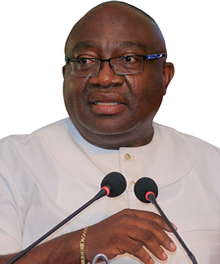 He is a legendary Nigerian Business Executive, an entrepreneur par excellence, the moving spirit of educational transformation in Nigeria, a philanthropist and humanitarian; born on December 10,1963 in Kaduna were his parents, natives of Uturu, lived then and worked.
Chief Gregory Ibe has gone further to establish his private University called GREGORY UNIVERSITY, UTURU with a focus on applied research, entrepreneurship and a work-based University education. His University has the mantra “knowledge for tomorrow”.
Chief Gregory Ibe has also established GREGORY IYKE FOUNDATION as a humanitarian medium to reach out to the poor and the helpless in Nigeria. The foundation is in affiliation with world Medical Relief Inc. and Global Medical Relief Inc. in the United States for execution of medical aid programmers in Nigeria.
 A renowned Nollywood Actress-Actress Rita is a very popular actress in the Hollywood and a Veteran Broadcaster who worked in the Anambra Broadcasting Services for many years before venturing full time into the Film Industry.
She is a Philanthropist who run an NGO, UMU-ADA Empowerment Initiative which caters for the sick and poorest of the poor in our society, providing them with food and shelter, medication etc.
She had also ventured into politics to see if she can also right the wrong in our political arena by giving it a human face if allowed. She has featured in more than two hundred movies in the Nollywood and produced a hand full of them.
Nollywood actress, Edochie Rita has been in marriage with his husband Tony Edochie for 22 years now. He works in the field of broadcasting and filmmaking with ABS.
 MR. GBENGA MICHEAL ARULEBA, was born Sixty – One Years ago into the Family of Prince David Aruleba of Ikere-Ekiti.His immense contribution to the establishment of Ray power FM, Nigeria’s Premier Independent Radio Station, broadcasting 24hours, complete indigenous programming was further challenged, as he was pulled along with his team to start off what is today the largest private television station on the continent, Africa In dependent Television (AIT).
It is worthy to mention that Gbenga has used his Media Platform, especially ‘FOCUS NIGERIA on AIT’ to speak for the voiceless and canvas for integrity and accountability in Governance and as well as promoted humanitarianism and social justice.
Aruleba began his career with Radio Lagos in 1983 where he served as an editor of the establishment before he left for DAAR Communications in 1996 as its General Manager of RayPower (Abuja) and later became head of current Affairs, a position he held til August 2016.
 Oluwatosin Abimbola Dopkesi was born on July 12,1969 in Lagos, Nigeria, to Prince Kola & Mrs Carolyn Odukoya. Tosin has worked with two multi media organizations as a Presenter and Programme Producer before joining DAAR Communications in 1996. However, her gifts and passion for broadcasting were further exposed when she joined the DAAR Family;
Tosin is widely travelled; her desire for knowledge saw her through the United States Information Training Institute in USA where she obtained a Diploma in TV broadcasting. She is one of the pioneer Presenters of the famous weekly current affairs programme Kakaaki, and is currently the Managing Director (MD) of Africa Independent Television (AIT).
She is a member of the Nigerian Union of Journalist and an Associate member of Nigeria Institute of Management.
She has many awards to her credit; some of them include “Great Woman of the 21H century in Broadcasting in Nigeria”, Citizens Image Special Recognition Award for her contributions to Nation Building. For her exceptional contributions to the broadcasting industry, Wisconsin University, USA conferred an honorary “Doctor of Philosophy” in Public Communications; for her unwavering love for children the World Mission for Children International gave her an honorary “Doctor of Communications “degree in 2003…to mention but a few.
Tosin is a philanthropist. Oluwatosin Abimbola Dopkesi is married to High Chief Aleogho Raymond Dokpesi.
 Lawrence Boms has a PhD. in International Relations and Diplomacy/ MSc. Oil and Natural Gas and Environmental Engineering/MA International Strategy and Development from Webster University/St, Louis Missouri/ Norwegian School of Management Bl.
He is the Head and Resident Representative, United Nations Institute for Training and Research (UN1TAR) Nigeria Office. Lawrence Boms worked with the immediate past ED of UN1TAR Dr.Boisard to establish UNITAR Nigeria Office in 2006. Ever since, he has developed world-class capacity development programmes for both public and private sectors institutions and tailor-made manpower skills development programmes.
Larry Boms, a Swiss/Nigerian citizen, is the Resident Representative, UN Institute for Training & Research (UNITAR) Nigeria Office. He started his international career as Research Fellow with United Nations Research Institute Social Development (UNRISD) from 1989 to 1992. He served as UNITAR Special fellow/Research Consultant on international energy and environmental issues. He worked as Research fellow at International Labour Organization Petroleum Division from 1993-1994. From 1996 to 2003, he worked as Senior Managing Partner of Africa Business Forum in Geneva. Lawrence worked closely with then Executive Director of UNITAR Dr Boisard to establish UNITAR Nigeria Office in 2006. He holds a PhD degree in International Relations and Diplomacy, University of Leeds. He is widely published.
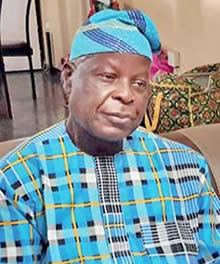 Sir (Dr.) Mike Okiro, CFR, NPM, mni a Fmr. indigenous Inspector-General of Police of the Federal Republic of Nigeria, was born on the 24th of July, 1949. While in office he worked tirelessly to provide secure environment for the actualization of Mr. President’s Vision of placing Nigeria among the world’s top 20 economies by the year 2020. This he had ably done by partnering effectively with the Ministry of Police Affairs and the Police Service Commission, in a conscious effort towards repositioning the Nigeria Police Force in the areas of Quality Training, Behavioral and Attitudinal Change, Community Policing and Service Delivery.
He significantly improved the welfare and morale of officers and men, by an enhanced salary package and improved logistics, notably owner-occupier houses. He also made police service more open, receptive and responsive to troubled spots in the country the results of which we are all living witnesses. He also created a channel tool of bridging the police-public divide; the philosophy that gave birth to “THE DAWN” newspaper. He has endeared himself to the hearts of Nigerians, thus earning him accolades, encomiums and honors such as:
Commander of the Order of the Federal Republic of Nigeria (CFR)
Knight of the Order of St. John of Jerusalem
Nigeria Police Medal
Commendation letter from the President Umaru Musa Yar’Adua; and numerous chieftaincy tittles from various communities.
 Sani Sidi was born on 12th August 1966 in Jere, Kagarko Local government Area of Kaduna State. Alhaji Sani was appointed Director General of the National Emergency Management Agency (NEMA) in September 2010 and recently re-appointed for a second term in office by the President, Dr Goodluck Ebele Jonathan GCFR.
He was Senior Manager (Supplies) at the then National Electric Power Authority (NEPA) between 1990-2003. He served as Special Assistant to the Honourable Minister of Finance, Abuja in 2003 to 2007. He was appointed Honourable Commissioner, Ministry of Environment and Natural Resources, Kaduna State from 2008 to 2010; Honourable Commissioner, Ministry of Culture and Tourism, in July 2010 to September 2010. Also at different times he was assigned with the responsibilities of overseeing the Ministries of Finance, Land and Education, respectively.
Sani Sidi is a member of many national and international professional bodies such as the International Association of Emergency Managers (IAEM). USA; International Emergency Management Society (TIEMS), Belgium; Institute of Civil Protection and Emergency Management (ICPEM), United Kingdom; World Society of Victomology (WSV), Germany; and Institute of Corporate Administration, Nigeria.
He has received several awards to his excellence in public service. These include Fellowship Award for Distinguished Professional Contribution by the Institute of Corporate Administration, March 2011; Award for Exemplary Leadership in Disaster Management by Conference on Disaster, Safety and Management, March 2011; Outstanding Chief Executive Officer by Thisday Newspaper, Special Reports, April 2011; CEO of Best Emergency and Disaster Management Agency of the year by African Leadership Magazine, London, June 2011; Human Rights Friendly Public Official of the Year by Human Rights Writers Association of Nigeria, December 2012. He was conferred with the National Honour of the Officer of the Order of the Federal Republic (OFR) in October, 2014.
 T.B Joshua was born on 12th June, 1963 by Pa Kolawale Balogun and Madam Folarin Aishatu Adesiji Balogun in Ondo state. He was no doubt preordained by God due to the mysteries surrounding his birth. It took his biological mother 15 months of pregnancy before his birth and at a very tender age, he escaped narrowly an accident within the home leading to the inscription name Temitope giving to him-meaning,worthy of thanks.
EDUCATION: He had his primary education in Imo state and couldn’t complete his secondary due to financial constraints. However, in his secondary school days; he manifested incredible knowledge in the scriptures and excelled mostly in religious studies. He was tagged little pastor in school due to his prowess in teaching and praying in the word of God and also taken a lead in Christian fellowships.
CHARITY: A unique pastor with a mission to serve and not to be served,” Pastor T.B. Joshua has instituted various compassionate missions, under the care of ‘Another Ministry’, the humanitarian arm of The SCOAN. With projects catering for the needs of widows, dwarves, physically challenged, elderly and destitute, the church provides accommodation, feeding and a sense of belonging to the lonely and lowly in the society.
The aged, at different locations nationwide are catered for by the man of God with special nurses, cooks and other humanitarian workers, on the pastor’s pay-roil, permanently stationed with them, Scholarship awards are given to orphans and children of the less privileged, with educational support promised from primary to tertiary levels.
In the Oko-Baba destitute home, he has sponsored close to 300 children throughout their educational career, many having already graduated. Alongside their school fees, he further gave school uniforms and a bus to transport the children to and from their school. Knowing the Importance of education, T.B. Joshua has also provided books and various academic materials to a variety of schools across the nation.
Furthermore, he assisted in promoting social norms and alleviating crime through his ministry, thereby contributing to social-economic development in the country. He lunched many vocational training to interested persons in his ministry and equipped with necessary requirements. His freelance gesture has in no measure benefited all and sundry without any string attached.
RECONCILIATION: He is also renowned for promoting peace in Liberia at a particular time thus contributing the country political stability. Also, many disbanded families under his ministry have enjoyed same gestures via reconciliation and unity. EMMANUEL TV: The launching of his recent broadcast satellite that operates round the clock and his air programme has enriched many lives spiritually and benefited a lot across the globe. Many are witnessing globally the impact and influence of the satellite live broadcasts in their lives and homes
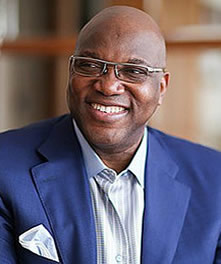 John Momoh, Founder and Chief Executive Officer of Channels Television is a renowned broadcast Journalist with a vast experience spanning 33 years.
Before founding Channels Television, John worked variously as Senior Reporter, News Anchor, News Editor and News Producer for Nigeria’s National Radio and Television stations, Radio Nigeria and Nigerian Television Authority (NTA).
He has won many laurels – Including “News Anchor of the Year”, of the maiden edition of the prestigious Nigerian Media Merit Award (NMMA) and Nigerian Union of Journalists (NUJ) “Newscaster of The Year”, all which attest to his venerated professional status. John Momoh Is a graduate of the University of Lagos with a Master’s degree in International Law and Diplomacy and a B.Sc (Hons) degree in Mass Communication. He is both a “Chevening” fellow and a fellow of the “African Future Leaders” Initiative of the Commonwealth Office of the British Government. John also holds Diplomas from the Thomson Foundation, Cardiff, U.K. and the Manchester Business School also In the U.K.
He is an alumnus of the Lagos Business(CEP-7), a former General Secretary Independent Broadcasters Association c (IBAN), former Honorary Secretary of It 1938, Nigeria’s premier social club, Chairman of the League of Nigerian Broadcasters(LNB). John is a recipient of the National Merit Award as the”Officer of the Order of the Niger” (OON) conferred on him by the President and Commander-In-Chief of the Armed Forces of the Federal Republic of Nigeria. He isalso a fellow of the Nigerian Guild of Editors and a recipient of the Lifetime Achievement (Broadcast Sector) by the Nigerian Info Society, John Momoh was also awarded Model Entrepreneur of the year (2007).
He is a member of the International Acac Television Arts & Sciences (IATAS) based York, U.S.A. His television station is Nigerian broadcaster to be nominated for International Children’s Day of Broadcast Award (ICDB)in the year 2002.
Channels Television of which he is the Chairman is ‘five time’ winner of the “Television Station of the Year” Award (2000, 2001, 2003, 20C 2008) endowed fay The Nigerian Broadcasting Commission. John Momoh is happily married to Sola also a broadcaster and they are blessed with three children.
HUMANITARIAN/PHILANTHROPIC WORK
1. Ambassador for the Red Cross Hope Abandoned Child
2. Support, Sponsorship and Media coverage
for the following;
a) Hope Worldwide
b) Special Olympics
c) People with Down’s syndrome in Nigeria
d) Pupils and Students in Primary, Secondary and Tertiary Institutions.
e) People with Disability
f) Nigeria Association of the blind
g) Nigerian Model High School
h) Deaf and Dumb graduates,
Chief (Dr.) Opral Benson is a Liberian by birth though happily married to a Nigerian and has children. She had her Basic Education in Liberia M.A Education in Georgia in Atlanta and a senior financial Analyst from Lagos Business School. A season ed teacher and a good administrator. She is a US trained beautician hence she is called the “lya Oge” and also a peace maker. She is a member of trustees, a patron and chairman to organisations such as Nigerian-South African Chamber of Commerce, Nigeria-American Chamber of Commerce to mention a few.
She also bagged several awards nationally and internationally among which are:-
ECOWAS International Gold Award, African Business Achievers GoldAward,Grand Lloyds Mother Award,International Federation for World Peace Award and others too numerous to mention.Moet of those awards were in the area of Sports, Communication work with youths and women, Newspapers, Magazines, Humanitarian etc.
“lya Oge” la a Rotarlan and holds several titles from Lagos, Egbaland, Ikorodu, Imota, lle-lfe, Ijede, Ipakodo, Oderemo, all these within different states of the federation.
She loves Music, Reading, Art and Fashion for her leisure and enjoys travelling which has taken her to different parts of the world such as Middle East, Europe, USA, Russia and Far East
She is a mother of all and of many faces.
A Former Governor of Abia State, T.A. Orji was conferred with a fellowship honour of the Institute fo r Humanitarian Studies and Social Development in 2009 following his outstanding humanitarian track records which equally earned him the award as MOST HUMANITARIAN FRIENDLY GOVERNOR in the same year.
Ochendo Global as he is popularly called has won other numerous awards to his credit, especially for his Peace and Security Services. He is the first Governor in Nigeria to be recognized in the area of combating kidnapping and insecurity.
Theodore Ahamefule Orji having served his people for eight years after being elected twice as the Governor of Abia State handed over to Dr Okezie Ikpeazu as the 4th democratically elected Governor of Abia State on May 29, 2015 at Umuahia, the capital of Abia State.
Dr. Mrs. Peace Okonkwo was born on the 10th of June 1952 and gave her life to Christ in 1974 at the Scripture Union Fellowship. She is a 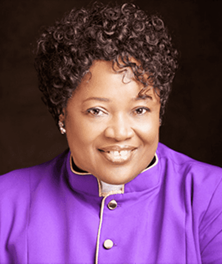 graduate of the Morris Cerullo School of Ministry and Rhema Bible Training Center, Tulsa, Oklahoma. She has attended many Christian Leadership Conferences both home and abroad and was ordained into the full time ministry on the 15th of August 1982.
Dr. Peace Okonkwo is a woman of many parts. She is mightily used by God In the counselling ministry. Her love and concern particularly for women and children sent her to her knees to seek the face of God on how to be a blessing to these two groups of people. This gave birth to three successful projects which many can testify of today.
The first is the Women Prayer School. This meeting is geared towards reaching hurting women and has recorded tremendous growth in the last two years.
The second project is the Word of Power Nursery and Primary School, which was born from her deep desire to see that our children are trained in the way of the Lord.
The third and the most recent project is the Rehoboth Homes and Skills Acquisition Centre. A home for stranded woman that not only provides a shelter for thorn, but also goes a step further to teach them a vocation before releasing them back to the society as responsible citizen of the country.
In 1997 Dr. Peace Okonkwo and her husband, Bishop Mike Okonkwo had the honour of having their names inscribed in the Jerusalem 3000 scroll number 6571 which is thus recorded in the history of Jerusalem with a certificate award. In 2005, she was conferred with the Nigerian Woman of the Year Award by the Media Dreams Network.In May 2007, she was given the Aids Candlelight Memorial Award. Today, she is the resident pastor, head of the Women Department, TREM Worldwide. She is married to Dr. Mike Okonkwo and they are blessed with a daughter Uche.
 Dr. Mrs. Aderienne Tikolo is the Head of Newland School in Lagos.
She attended the Wilton House School, Sussex, England and then the University of Lagos where she obtained a first degree in Biology with Education; A Master’s Degree in Educational Administration and a Doctorate Degree in Education.
A seasoned administrator and specialist inschool effectiveness, she is actively involved in volunteer work to raising funds for children’s charities. She has a strong desire to help and improve people’s lives. The powerful notion of caring and service to others has played an important role in both her professional and personal life.
As Head of Newland School, she is positioned to reach a large number of people including children. A position she uses to exercise her commitment to humanity while carrying out her administrative duties.
Dr. Mrs Tikolo has been involved in various voluntary and philanthropic works as Patron of the Nigerian Red Cross Society and a Trustee of Human Aid Global Advocate (HAGA), an NGO dedicated to the social well-being of the Nigerian Youths.
Although she is one of Nigeria’s anonymous donors we have in our society who never seeks recognition in her doings but unfortunately and fortunately for her, her generosity has continued to expose her to all lovers of humanity.She instituted the Newland School Charity that carries out humanitarian works. Some Include but are not limited to awarding scholarships to under privileged students, regularly conducting charity drives for the needy and activity providing support for the Nigerian Red Cross Society.
 Aderemi Desalu was born on the 29th of August 1962, at the Lagos Island Maternity Hospital, Lagos State; where he received his primary secondary and tertiary education. He received his Bachelor of Dental Surgery at the College of Medicine, Lagos University Teaching Hospital in 1986, where he passed out with a Distinction. He got his primary FFD from the Royal College of Surgeons Ireland and has a Certificate in Ethics from the Harvard School of Public Health Boston USA, a Diploma in HIV/ AIDS prevention from the College of Veneral Disease Prevention UK and a Certificate in Institutional Development from the Royal Institute of Public Administration (RIPA) London, UK. He also has numerous certificates from courses and seminars attended. He was appointed to serve on the Lagos State Transition Committee on Health by the Governor of Lagos State in 1999 and later into the Board of the Lagos State Football Association where he served as the chairman of the Health and Medical Committee. Nigeria, St. James the Great Ang. Church, Ibadan, etc. She is happily married with children served as the chairman of the Health and Medical Committee.
He was also the special adviser to the Governor of Lagos State on HIV and Related Matters. He ran the LSACA till 2007 and the LSACA remains today a legacy to his vision.
His effort in launching and institutionalizing the fight against HIV/AIDS in Lagos and Nigeria is very well recognized. During his tenure the prevalence rate of HIV/AIDS in Lagos fell from 6.7% (1999) to 3.3% (2006). This is in addition to other significant changes to availability, accessibility and affordability of free VCCT services and Treatment in Lagos, and he was responsible for building a robust and meaningful stakeholders forum. He has also served on the board and as advisor to numerous Non-Governmental Organizations and has received over 100 commendations and awards for public and social service especially in the fight against HIV/AIDS in Nigeria.
He was a Dental surgeon in private practice until he was appointed to serve in the public service as the foundation executive secretary of the Lagos State HIV/AIDS Foundation and the Foundation CEO of the Lagos State AIDS Control Agency (LSACA)in 1999.
He has headed numerous programmes with partners on behalf of the State; these include Bi lateral and Multi-lateral programmes with partners such as the World Bank, United Nations Agencies and Local, National and International Organizations. He was appointed the Permanent Secretary for Health in 2007. He served in this capacity until his nomination in January of 2009 as the delegate to attend the prestigious National Institute for Policy and Strategic Studies (NIPSS).
He returned to the Lagos State Public Service after his course at NIPSS in November of 2009 and was posted as Permanent Secretary to the Ministry of Special Duties, where he now serves the people and state of Lagos.
 CHIEF (MRS.) GRACE EBUN DELANO
Chief (Mrs.) Ebum Delano was born in 1935, had her basic education in Lagos and Abeokuta in early fifties, she is a trained Nurse, Mid wife from U.K and had several higher educational certificates In Nursing and Reproductive Health from U.S.Aand U.K.
In Her career, she worked in several places in various capacities nationally and internationally. She worked in U.K before returning to Nigeria to work in UCH where sherose to different exotic positions. She later became the Executive Director of the Nigeria’s famous and arguably most active indigenous NGO ‘Association for Reproductive and family Health (ARFH)’ based in Ibadan, Oyo State
AWARDS
She has several National and International Awards to herself in the field of Nursing, NGO from local and international bodies and NGOs. Those include:
Distinguished Award from WACN, in Liberia
Millennium Award from Pathfinder Int’l
Distinguished CEDPA Alumni
Florence Nightingale Award from NMCN
Sasakawa Health Award by WHO and so many others too numerous to mention.
She belongs to so many organization! Serving as an adviser/consultant, e.g Ford Foundation, IPPFN, and American Public Health Association etc. Mama has so many traditional/ Cultural/Religious title from cathedral, the Holy Trinity, Ifo, Church of Anglican Communion, Ibadan Diocese, First African Church Mission, Ibadan, Osi ekiti, Oshogbo, Egbaland and many others. She is a member of board of trustee of several organizations e.g. Kola Daisi Foundation, Civil Society for HIV/AIDS In Nigeria, St. James the Great Ang. Church, Ibadan, etc. She is happily married with children.